Overcoming the Listening Deficit

Leadership requires active and invested listening. Value isn't created without taking time, effort, and interest to suss out the circumstances and obstacles our listener is facing. Desperation to speak and associated failure to listen aren't just distressing crises; they're creating a communication deficit that opens chasms across teams and costs billions in real performance potential losses.
Egotistical leaders, over-confident managers, and self-absorbed speakers are often consumed with proving their merit but forget why that merit is needed. And who that merit should benefit. Once a team captain or session host becomes obsessed with their own voice, vision, and agenda, it's game over. Charisma and confidence are enviable, but not at the expense of hearing what others actually want and need from us.
COACH or CRASH

Linus Okorie of the GOTNI Leadership Centre says that most leaders don’t realize they have stopped listening until it’s too late. Their communication becomes a monologue instead of a dialogue, the boardroom an echo chamber, the executive center of their own little universe where no one else matters.
Active listening is a severely underrated—and under-practiced—leadership skill. It requires being fully present, available, and genuinely curious about what others think and feel.
Robert Dilts, co-founder of modern NLP, coined the COACH State acronym for active listening: centered, open, aware, connected, holding. It's a practice for living in the moment, in service of our audience, fully invested in their needs and success as a means of mastering our own communication value.
The counter to COACH is CRASH: contracted, reactive, action paralysis, separated, hostile. These are frequent norms in modern corporate – and even familial – roles, resulting in lost opportunity and failed engagement. Authority figures who revel in that authority without honoring those who bestow it are guilty on all five CRASH counts. Speakers only interested in hearing themselves speak are toxic.
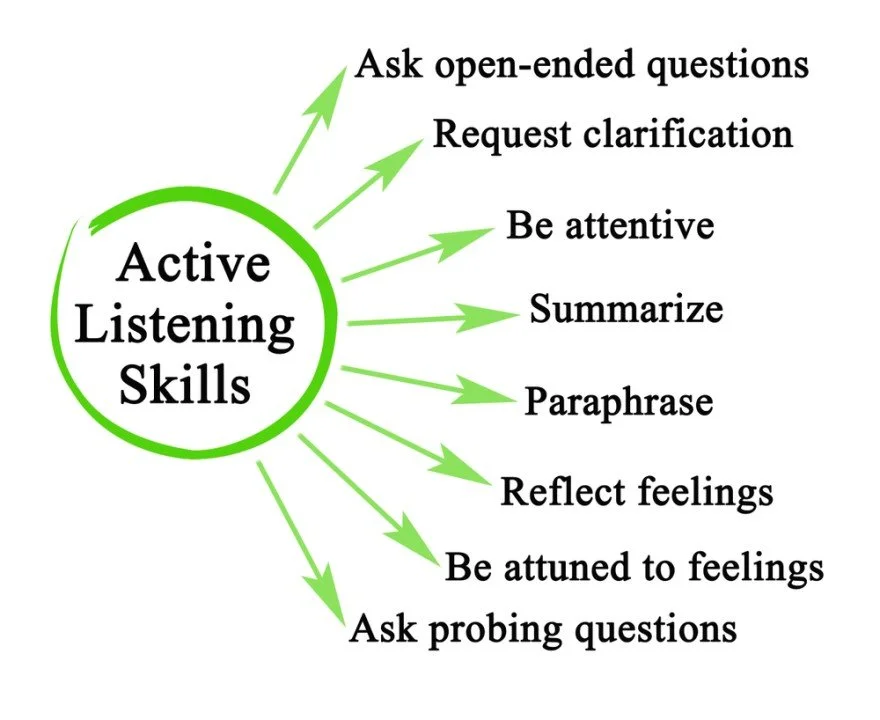
Listen, then speak – again and again and again
In You're Not Listening , NYT journalist Kate Murphy offers this familiar concept: "We know what a pain it is to have to listen to someone who, for want of a politer phrase, just won’t shut up." She also offers this wisdom: "It seems that just by keeping our mouths shut and our ears tuned, we become magnetic." It's a fine lesson for any leader (and every speaker) to hear and heed.
Listening and speaking are happy bedfellows. What we talk about, and how we create beneficial content that's well-received and fully internalized, are fully tied. Our words should directly and actively reflect what our listeners or teams most want to gain from their time with us.
First we listen to their expectations, then we open our mouths to address those expectations in that particular moment for that particular person or group. From the first word of our talk to the last, we listen, then speak, then listen, then speak, over and over, constantly hearing their perspective and adjusting our #Corporatestorytelling to assure our message aligns with their best interests.

Bottom Line
Are you really, actively listening to your audience or team? Carefully consider then honestly respond to these seven questions:
1. Am I reaching and inspiring each person in the room with my content? If not, it's likely an issue with you paying attention to them rather than them not caring about you.
2. Are you encouraging active participation? Successful leaders encourage the expertise and involvement of others to create shared winning outcomes.
3. Is your value or your ego taking the lead? Until you deliver meaningful change for the people you're speaking to, you're just talking to talk. Listen more instead.
4. Are you celebrating others more than you celebrate yourself? Your experience is great, but limited; your team’s experience is vast. Ask for their insights to uplift your own.
5. Do listeners walk away with ownership and pride? Expert communication seeks partnership to empower and get others excited about their success.
6. Do they ask to hear more or eagerly continue the conversation? If they ask questions, offer options, or even challenge your story with their viable alternatives, they're engaged and involved. No response equals no interest.
7. What body language do they exhibit as you speak? Sitting up, leaning in, nodding, shaking heads, raised hands, smiles, frowns, all are indications that what you're saying is landing and creating impact. Blank stares, zero reaction, and checking phones all mean stop talking and start listening.