The Pratfall Effect
The Pratfall Effect occurs when people who are considered highly competent make a public mistake, recover with humility and grace, and become more likable and trustworthy because of their error. Social psychologist Elliot Aronson studied and named the effect in 1966, proving that those we consider “superior” become more attractive after committing a small pratfall.
Superior people are viewed as superhuman and unapproachable. A small gaffe humanizes them, brings them down to our level, and helps us relate to them better after their fumble than before. For a speaker who’s clearly competent and knowledgable about their topic, showing vulnerability or dropping the ball can make people like them more. And likability is crucial for message acceptance and persuasion. In presentations and executive meetings, the Pratfall Effect isn’t just acceptable, it’s preferable. Even empowering.
To err is human

When—not if—you say the wrong thing, forget what comes next, or the slide deck freezes mid-demo, only one person truly cares: you. Things can and will go south, for even the most accomplished public speaker. And usually at the most critical time. Everybody messes up; the difference is how we handle the goof.
The misstep always feels far larger to us than it will to our audience. Winning communicators simply acknowledge the awkward moment and move on. The slides die, but the story continues. The presenter forgets a key point, and lets it pass with a mental note to return to it later on. Or not at all, saving that missed content for the next point of contact.
Don’t stop. Don’t over-apologize. Don’t go back to recover. Give a quick oops statement, maybe try a light joke about your age, addled brain, or how you shouldn’t have speed-balled that cough syrup before stepping on stage. Handled with calm confidence, a mistake works for you rather than against you. Your leadership instantly becomes real and accessible to listeners, a credible storyteller instead of another too-smooth company pitch man.
Tripping with style
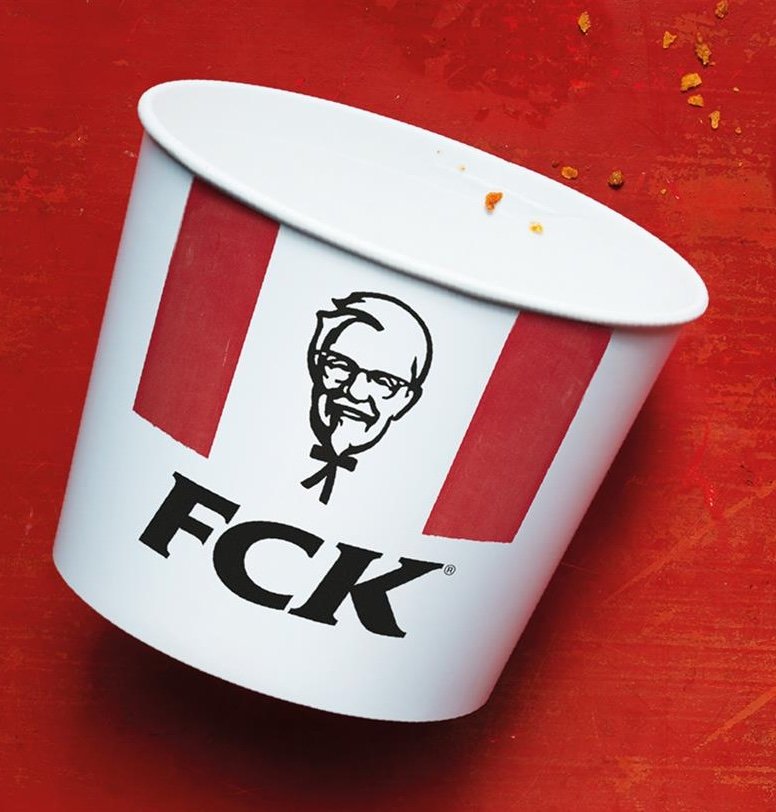
A massive logistical failure caused a chicken shortage and forced hundreds of KFC stores to close. So they instantly ran a full-page ad rearranging their logo to read "FCK." By acknowledging the mistake, owning it with humor, and demonstrating that humans make boo-boos, sales spiked.
When Avis had been losing money for 13 straight years to Hertz, they launched a campaign saying, "When you're only No. 2, you try harder." That admission of failure was a popular Pratfall Effect that transformed a $3.2 million loss into a $1.2 million profit for Avis. People loved the humility and sense of humor, and rewarded the brand’s likability.
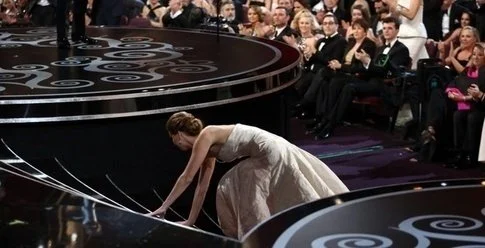
The image at the top of this blog shows Jennifer Lawrence who, in 2013, demonstrated perhaps the most famous example of the Pratfall Effect when she tripped up the stairs to accept her Best Actress Oscar at the 85th Academy Awards. After stepping on and getting tangled in the voluminous fabric of her custom Dior Haute Couture ball gown, Lawrence laughed, rose with help from nearby attendees including Hugh Jackman, and quipped to the standing crowd, "You guys are just standing up because you feel bad that I fell, and that's really embarrassing". The room erupted, and the world loved her even more for the accidental tumble. This stunning, ethereal beauty and Hollywood royalty instantly humanized and averaged in front of millions.
Bottom Line
Every speaker can and should take valuable lessons from these examples of how public mistakes can pay off. We don’t have to be perfect in our presentations and team leadership sessions; in fact we’re better off not being perfect. But keep in mind that the Pratfall Effect works best when two rules apply:
1. Before we show a flaw, we have to establish credibility and skill. Making an error when people doubt our confidence just reinforces the doubt.
2. Minor blunders only, please. If the speaking or slide mistake is a small, harmless slipup, that’s potential gold; if it’s a major failure of judgment or ethics, that’s a problem.

In Elliot Aronson’s original 1966 lab experiment, a brilliant quiz contestant who spilled coffee on himself was rated significantly more likable by participants than an equally brilliant contestant who did not spill anything. Next time you lead a client meeting or C-suite proposal and make an unplanned splash, enjoy the opportunity to prove your humanity and show your likability.