Here’s your deep dose of public speaker reality for a Tuesday: More information leads to less understanding. Sounds counter-intuitive, but the science is undeniable.
Speakers think adding information or packing slides with extra content will make their presentation better. Yet the opposite is true. Welcome to one of the most expensive mistakes in communication.
We've been conditioned to believe that the more data we offer, the more credible we sound, and the more informed our audience becomes. So we build more charts, type more bullet points, and deliver more supporting evidence to fill each moment of our impressive talk.
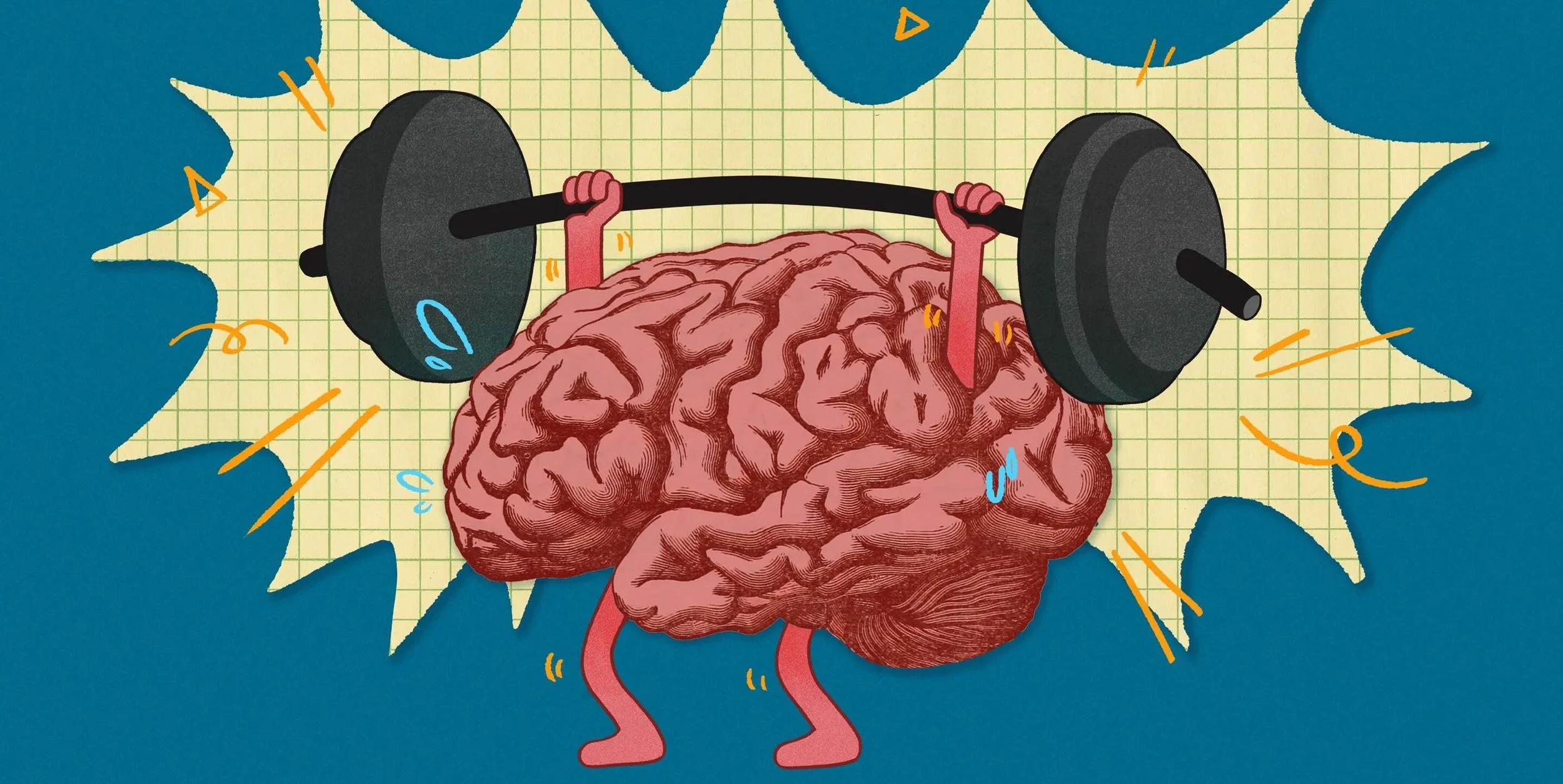
Meanwhile, cognitive psychology and neuroscience prove these to be the worst speaking strategies we can deploy. An audience can only process so much information at once. So as our speech rolls out, every new concept begins competing with every previous piece of our message.
Compounding the error, we add more on-screen text to an already narrated presentation, which actually decreases learning. Turns out Less is More is not just a catchy turn of phrase; it’s a recipe for greater comprehension and more takeaway value.
One message, two tasks
Consider the single most common culprit in losing audience interest and attention: PowerPoint.
Saturated slides, packed edge to edge with flow charts, paragraphs, bulleted benefits, and confusing processes create a steady stream of clickable distractions from any presenter’s words. This phenomenon is known as the split-attention effect and has long been a popular subject in cognitive load theory and multimedia learning research.

An audience looking at an overly dense slide while listening to the presenter explain that same information fades fast. Their eyes are reading, their ears are listening, and their brain is trying to reconcile two streams of essentially identical information. But working memory has very limited capacity. Instead of concentrating on understanding the core message, the listener exhausts precious mental resources processing, comparing, and keeping up.
Researchers Richard Mayer, Julie Heiser, and Steve Lonn conducted experiments on narrated presentations about lightning formation. Audiences hearing the narration while simultaneously reading text summarizing or duplicating the narration performed worse on retention and transfer tests than those who experienced the narration alone. Addedretention and transfer tests than those who experienced the narration alone. Added information reduced learning.
A 2012 study by Christof Wecker found that typical text-heavy presentation slides suppressed retention of information delivered verbally. But concise, single-topic slides avoided that effect and produced the strongest overall retention. Audiences don't need more content; they need more mental room to understand what they’re hearing, why it matters, and the value it offers.

Two good stories beat twenty bullet points
Say you’re presenting a quarterly business strategy to a room full of executives. Slide one features 12 bullet points, 6 in column A and 6 in column B. Slide two shows a chart showing 17 interconnecting data points, each with its own cryptic symbol for a stage in the process flow. Slide three offers a four-sentence paragraph explaining the chart.
Your audience isn't thinking, "Wow, what a wonderfully comprehensive presentation!" They're thinking, “Do I really need to read all that? What am I actually looking at? What do those symbols mean? Should I read ahead? Do I need to listen at the same time? What does the list on the left tell me compared to the list on the right? How does that flow chart represent my specific business application? Did I miss that last sentence?”
The result is a presenter doing their best to prove value and authority while the client loses the plot or feels disconnected from the story. An employee starts wondering how any of this affects their actual job. An executive may be quietly calculating how many emails they could have answered in the last 20 minutes.
Consider two ways to communicate the same business challenge. Version 1: “Customer retention declined 18% this quarter. Our response times increased 23%. Customer satisfaction scores dropped 11 points. We need operational improvements.” Accurate? Absolutely. Memorable? Not particularly.
Now Version 2: “Last Tuesday, one of our longest-standing customers called. She'd been trying to get an answer from us for three days. When she finally reached someone, she said something that should keep all of us awake at night: 'I love your company. I just don't knowsomething that should keep all of us awake at night: 'I love your company. I just don't know if your company loves me anymore.’”
Now those numbers have a human face, and the audience understands what's at stake. The statistics haven't disappeared; they've acquired personal meaning.
Bottom Line
So what can we do differently?
1. Give each slide one job. Replace paragraphs and bullet-point inventories with a single compelling idea, image, chart, or memorable phrase.
2. Stop reading your slides. Your audience can read; they don’t need you to do it for them.
3. Skip the explanation. Your job is not to dump every detail on your audience, but to interpret, challenge, and connect on a personal level so they feel what’s at stake.
4. Put people before percentages. Introduce the customer, employee, or real-world challenge behind the numbers before presenting the data.
5. Use stories to make the stakes personal. What happened? Who was affected? What changed? Why should anyone care?
6. Create processing room. Stop adding information and let fewer important ideas really land and sink in. Less is always more.
The enemy you want to defeat is anything that risks overwhelming listeners with complex, competing, or duplicated material. Before your next presentation, open your slide deck and remove at least half the words. Then identify one real human story that gives your most important point personal stakes and build your presentation around that story, not around the spreadsheet.
If your audience has to remember too many numbers, they’ll forget why those numbers matter. Cognitive overload never creates a memorable presentation; it’s just a boring book report.