AI as a Storytelling Partner
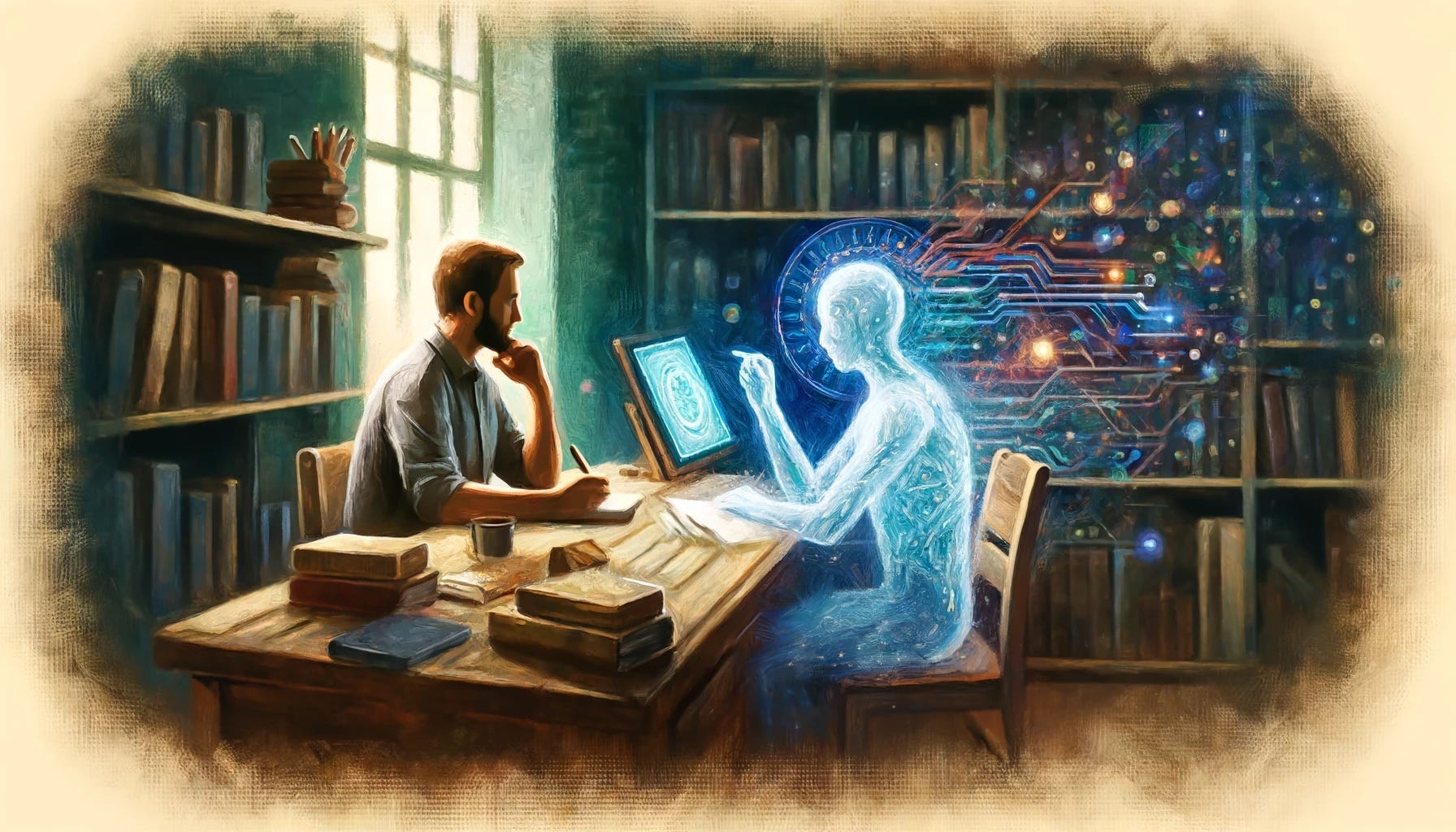
We're rapidly evolving into a society that leverages AI for most business and creative projects. Estimates now show that 30%-50% of all student essays involve significant AI drafting, while up to 84% of high schoolers use AI for brainstorming or revising. These are the professionals of tomorrow's workforce, widely accepting and relying on technology to define their careers, and to support their intrinsic value to employers, colleagues, even potential mates.
But what story does that reliance on an LLM tell about an individual and their fundamental abilities to learn, process, or ideate without machine support? Can any of us ever truly be compelled or invested in anyone's story when it's largely crafted by an algorithm rather than actually lived by that fellow human?
It’s all in the name

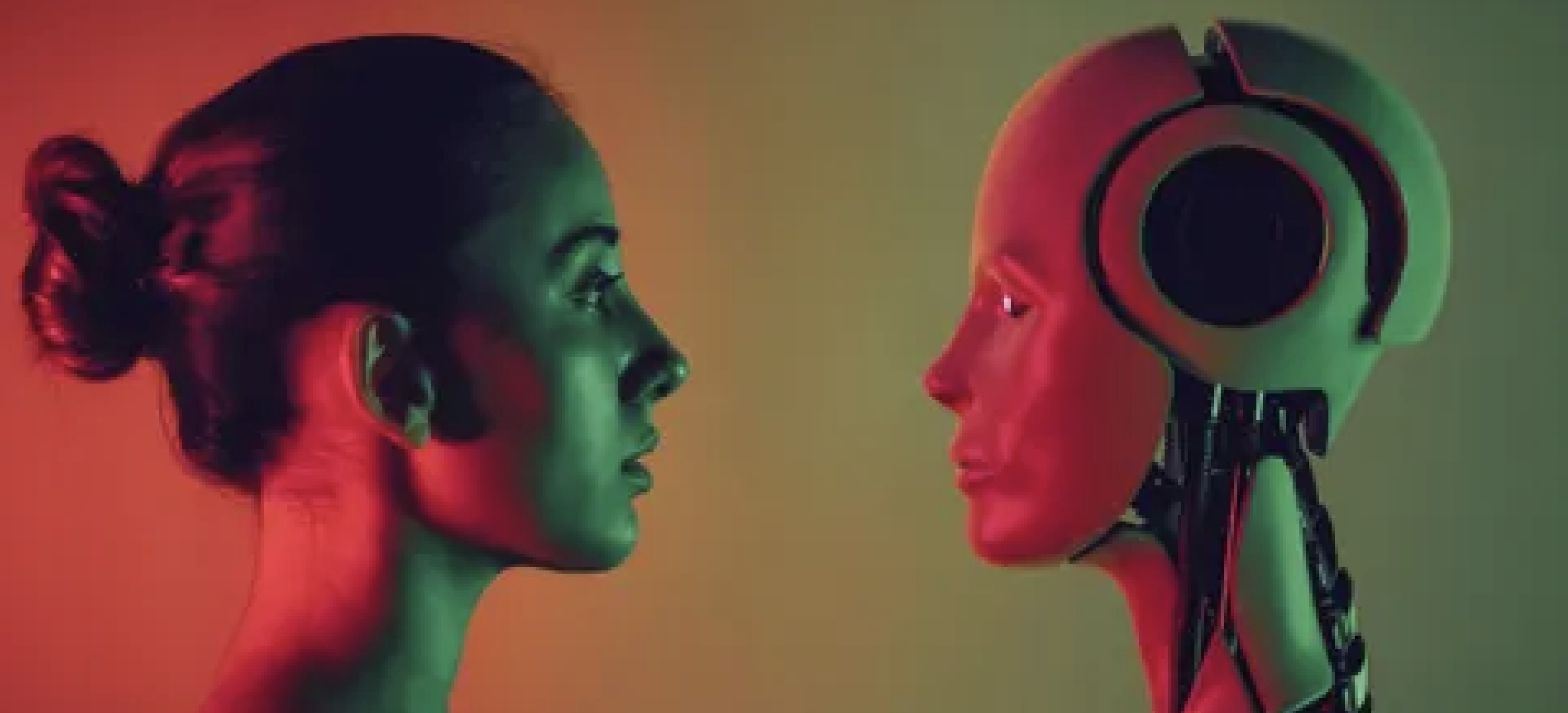
In his June 5 essay for Big Think, Neuroscientist Anil Seth contrasts the deep differences between human minds and artificial ones. The core divider is clearly consciousness. Connective stories are derived and delivered from and with conscious perspective, something AI can't offer and will never develop.
Seth says, “We see ourselves through the lens of the things that we create.” But when we choose to let AI do the creating, our self-awareness lens gets cloudy and suppressed. Perhaps insignificant. Until very recently, the brain has always been our most powerful processor and personal storyteller; what happens to us individually and as a society if we deliberately cede that distinction to AI?
It's all in the name: Artificial. Intelligence. It's not authentic. And not truly intelligent. But it seems smart; it can talk to us, research for us, perform our work, and speed our processes. Yet it has no stories of its own. No consciousness or personal stake. Whatever it knows is simply pulled and assembled from the lived realities of others.
Which leaves anyone who speaks publicly or on behalf of their company to choose how we partner with AI for public talks, leading team meetings, or presenting to our board of directors. If we expect these audiences to invest in us and in our important message, that message does, in fact, have to be ours.

Stochastic parroting
Seth describes large language models as “stochastic parrots,” systems that generate human-like language by calculating statistical probabilities, but without truly grasping their meaning. Precisely why we have to be so cautious when offering AI-generated content as original thought or personal argument.
Seth sees this trend as “mechanizing our minds” in a way that is diminishing and reductive for what it means to be human. “We’re not cognitive computers, we’re feeling machines.” Remove the feeling, and any story we share becomes manufactured rather than original.
Another leading neuroscientist, Antonio Damasio, has shown that feeling is essential to cognition itself. “To reason effectively, we need the feeling part of our humanity (and) nature." In other words, without bodily input and emotion, we can't make genuine connections or good decisions. Same with someone listening to us speak. When we let AI lead the stories we tell in the workplace, our colleagues or customers can't and won't make their best decisions either.
Honesty and authenticity guide our most compelling arguments. Reliance on artificial or collectively manufactured storytelling demonstrates lack of care for our position, and for our intent to improve the lives of others when representing our brands and products.
Bottom Line
AI very much has its place, and creates sizable potential for societal and organizational improvements which only materialize in partnership as opposed to competition with humans. Jobs have been and will continue to be lost to machines and systems; manufacturing, supply chain, construction, healthcare, education, aviation, design, and delivery are all heavily impacted by artificial intelligence. In some instances, rightfully so, in others, questionably so. We're still just guessing at the real practical, economic, and societal value outcomes.
With one glaring exception: AI will not improve human creativity, or our collective ability as a species to think, process, and ideate for ourselves. Things will get more automated, but our story will not grow stronger in partnership with AI.
Of course, we've fretted over this same challenge before. We once knew the phone numbers of every person in our circle, then autodial made that unnecessary. Every driver learned their routes and how to follow a map, until GPS killed instinct and attention to direction. 100 years ago, the family gathered around the piano to sing songs and play games, but television made isolation and individualism the norm.
Humans have shared value-driven stories with one another since the dawn of evolution and never required a machine's involvement. Beware the partnership that evolves into the replacement. Augmented versus automated is a very wide line.